

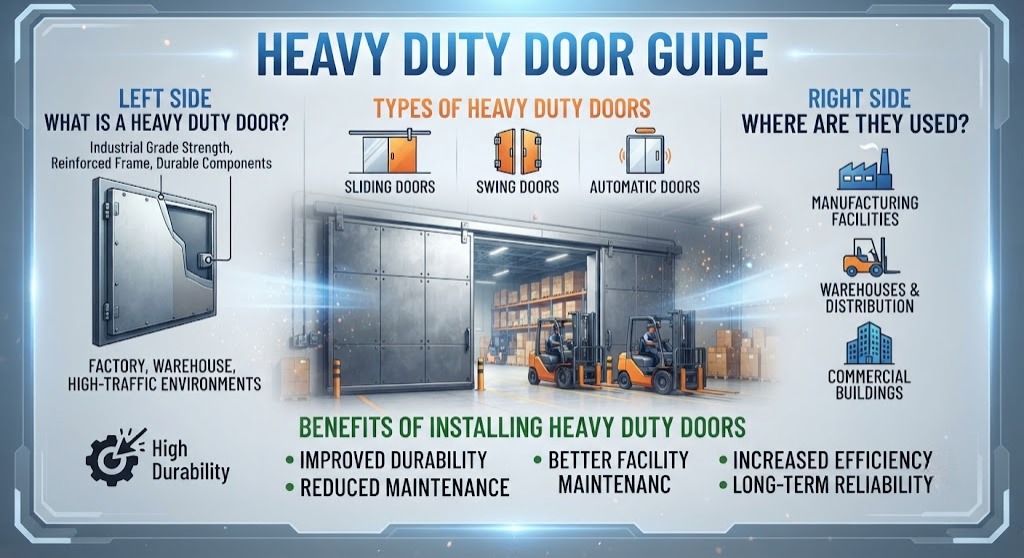
What Is a Heavy Duty Door?
A Heavy Duty Door is an industrial-grade door system designed for environments that require higher strength, better durability, and more reliable performance than standard doors. These doors are commonly installed in factories, warehouses, manufacturing facilities, logistics centers, commercial buildings, and areas with frequent access requirements.
Unlike ordinary doors used in residential or light commercial applications, Heavy Duty Doors are manufactured with reinforced structures, stronger frames, durable materials, and components designed to withstand repeated operation. They are suitable for locations where doors are opened and closed many times every day or exposed to demanding working conditions.
Selecting the right Heavy Duty Door requires more than choosing a strong material. Businesses need to evaluate the environment, traffic volume, security requirements, maintenance expectations, and operational goals. A properly designed door system can improve workflow efficiency while reducing unnecessary downtime caused by door failures.
Types of Heavy Duty Doors
Different industries have different requirements, so Heavy Duty Doors are available in various designs and operating systems. Understanding the common types helps businesses select a solution that matches their facility needs.
Heavy Duty Sliding Doors
Heavy Duty Sliding Doors are commonly used in warehouses, industrial buildings, and large openings where space efficiency is important. The sliding mechanism allows smooth operation without requiring additional swinging space.
Heavy Duty Swing Doors
Heavy Duty Swing Doors provide strong protection and are often used in areas requiring durable access points. They are suitable for environments where impact resistance and structural strength are important.
Automatic Heavy Duty Doors
Automatic Heavy Duty Doors combine durability with convenient operation. They are commonly used in facilities where frequent movement, safety control, and operational efficiency are priorities.
Where Are Heavy Duty Doors Used?
Heavy Duty Doors are widely used across different industries because they provide stronger performance in demanding environments.
Manufacturing Facilities
Manufacturing plants often require reliable doors that can handle continuous operation, equipment movement, and industrial traffic. Heavy Duty Doors help maintain smooth workflow between production areas.
Warehouses and Distribution Centers
Warehouses depend on efficient loading and unloading processes. Heavy Duty Door systems are commonly installed in loading zones and storage areas where frequent vehicle and personnel access occurs.
Commercial and Public Buildings
Some commercial facilities require Heavy Duty Doors for enhanced security, controlled access, and long-term durability in high-use areas.
Heavy Duty Door Installation Process (5 Steps)
Step 1: Site Inspection
A professional supplier first evaluates the installation area, including opening size, surrounding structure, operating environment, and usage frequency.
Step 2: Requirement Analysis
The supplier discusses required functions such as security level, operation method, material selection, insulation requirements, and maintenance expectations.
Step 3: Manufacturing and Preparation
After confirming specifications, the Heavy Duty Door components are manufactured and prepared according to the project requirements.
Step 4: Professional Installation
Technicians install the door system, adjust components, and ensure smooth operation according to safety and performance requirements.
Step 5: Testing and Maintenance Guidance
The final stage includes operation testing, safety inspection, and maintenance recommendations to help extend the service life of the door system.
How to Choose a Heavy Duty Door Supplier (6 Tips)
Choosing the right Heavy Duty Door supplier can affect product quality, installation results, and long-term maintenance costs. Consider these six points before making a decision.
Choose suppliers with industrial project experience.
Confirm whether customized door solutions are available.
Check material specifications and product durability.
Review installation experience and technical support.
Avoid choosing only based on the lowest quotation.
Confirm warranty and after-sales service information.
Heavy Duty Door Cost Factors
The cost of a Heavy Duty Door depends on multiple factors. A professional quotation should consider the actual requirements of the facility instead of providing a simple fixed price.
Door Size
The size of a Heavy Duty Door directly affects the overall cost. Larger door dimensions require stronger structural support, more materials, and additional engineering considerations to ensure stable operation and long-term durability.
Material Selection
The choice of materials, such as steel, aluminum, reinforced panels, or other industrial-grade materials, will influence durability, maintenance requirements, and the final pricing of the Heavy Duty Door system.
Automation System
Automatic opening systems, sensors, control devices, and smart access functions can improve convenience and operational efficiency, but these additional features may increase the overall investment cost.
Installation Conditions
The complexity of the installation environment can affect the total cost. Locations with special structural requirements, limited working space, or additional preparation work may require more installation time and resources.
Additional Features
Additional functions such as enhanced security systems, insulation performance, customized designs, and special operating requirements may influence the final cost of a Heavy Duty Door solution.
Benefits of Installing Heavy Duty Doors
Improved durability for demanding environments.
Better protection for industrial and commercial facilities.
Reduced maintenance issues caused by unsuitable doors.
Improved workflow efficiency in high-traffic areas.
Flexible solutions for different industries and applications.
Heavy Duty Door FAQ
Q1: What is a Heavy Duty Door used for?
Heavy Duty Doors are used in factories, warehouses, commercial buildings, and industrial environments requiring stronger durability and reliability.
Q2: How do I choose the right Heavy Duty Door?
The right door depends on application environment, size requirements, operating frequency, security needs, and maintenance expectations.
Q3: How long does Heavy Duty Door installation take?
Installation time depends on door size, design complexity, and site conditions.
Q4: Can Heavy Duty Doors be customized?
Yes. Many suppliers provide customized sizes, materials, and operating systems based on facility requirements.
Q5: Are Heavy Duty Doors suitable for warehouses?
Yes. They are commonly used in warehouses because they can handle frequent access and heavy traffic.
Q6: What affects Heavy Duty Door pricing?
Pricing depends on size, material, automation, installation requirements, and additional features.
Q7: Do Heavy Duty Doors require regular maintenance?
Regular inspection and maintenance can help maintain smooth operation and extend service life.
Q8: Where can Heavy Duty Doors be installed?
They can be installed in industrial facilities, warehouses, factories, logistics centers, and commercial buildings.
Q9: How do I find a reliable Heavy Duty Door supplier?
Look for suppliers with experience, customization capability, installation support, and clear product information.
Q10: Are Heavy Duty Doors suitable for high-frequency use?
Yes. Heavy Duty Doors are specifically designed for environments with frequent opening and closing requirements.